Canada is one of the world’s fastest-urbanizing nations — and the 2026 numbers make that crystal clear. From coast to coast, millions of people are planting roots in Canada’s largest metropolitan areas, driven by record immigration waves, booming job markets, and a quality of life that consistently ranks among the best on Earth.
The biggest cities in Canada — Toronto, Montreal, and Vancouver leading the charge — aren’t just growing in headcount. They’re transforming culturally, economically, and architecturally at a pace unseen in previous generations. Smaller cities like Brampton, Hamilton, and Edmonton are quietly becoming powerhouses, absorbing overflow from pricier neighbours.
Whether you’re a curious reader, journalist, or someone genuinely thinking about where to move next — this guide breaks down the real picture of Canada’s major cities in 2026: populations, GDP, crime rates, minimum wages, tax environments, and what life actually feels like on the ground.
Full Data Breakdown
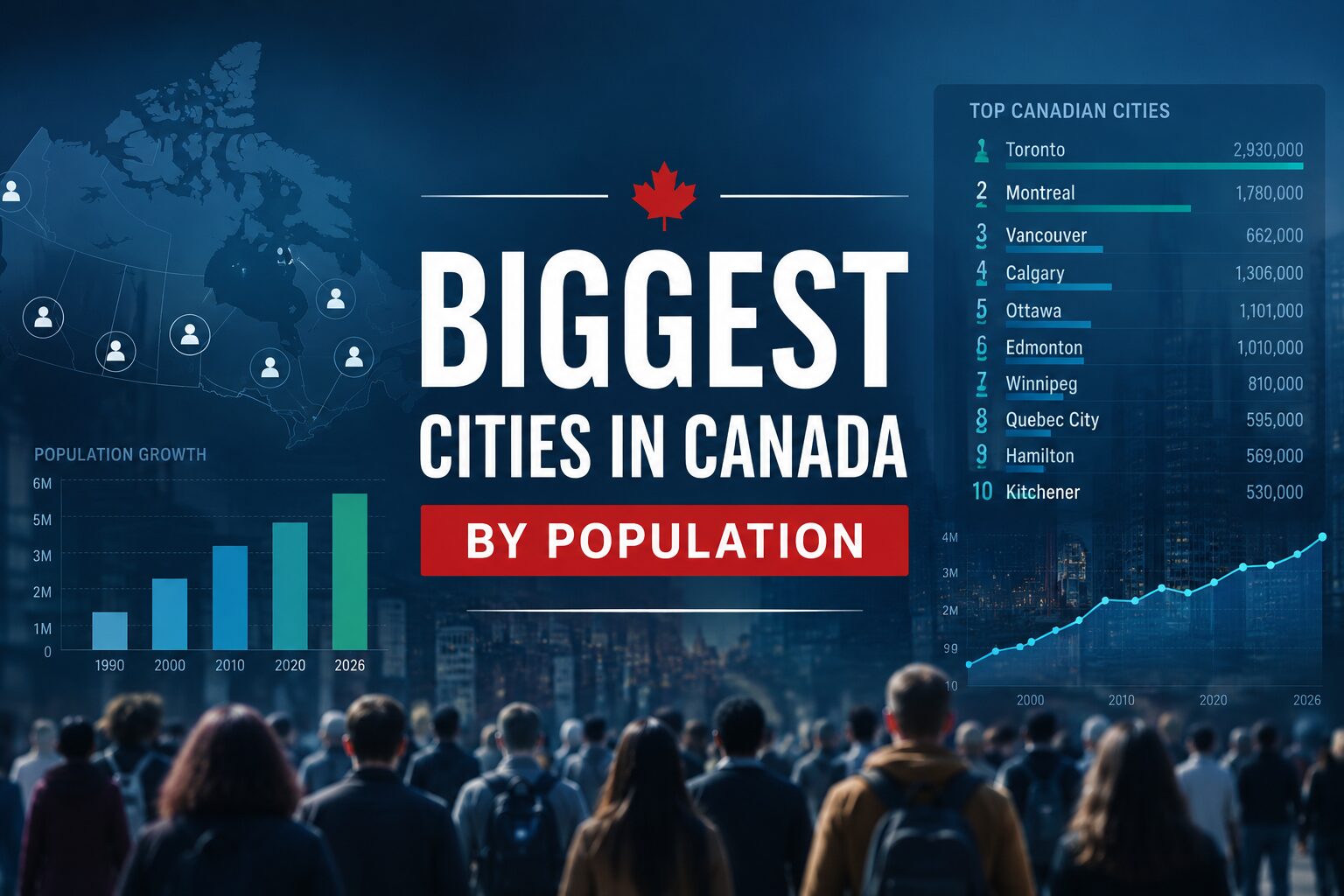
City Comparison Table — Canada 2026
| Rank / City | Population | Growth | Metro GDP | Min Wage | Prov Tax | Crime Idx | Province |
|---|---|---|---|---|---|---|---|
|
#1Toronto
|
6.4M+ | ▲ 2.1% | ~$520B | $17.20/hr | 13.16% | 52 Med | Ontario |
|
#2Montréal
|
4.3M+ | ▲ 1.7% | ~$240B | $15.75/hr | 25.75% | 44 Low | Quebec |
|
#3Calgary
|
1.7M+ | ▲ 3.4% | ~$115B | $15.00/hr | 0% ✓ | 55 Med | Alberta |
|
#4Ottawa
|
1.5M+ | ▲ 1.9% | ~$80B | $17.20/hr | 13.16% | 36 Low | Ontario |
|
#5Edmonton
|
1.5M+ | ▲ 2.5% | ~$72B | $15.00/hr | 0% ✓ | 65 High | Alberta |
|
#6Mississauga
|
850K+ | ▲ 1.5% | ~$48B | $17.20/hr | 13.16% | 38 Low | Ontario |
|
#7Winnipeg
|
850K+ | ▲ 1.6% | ~$40B | $15.30/hr | 17.40% | 72 High | Manitoba |
|
#8Vancouver
|
2.7M+ | ▲ 1.8% | ~$160B | $17.40/hr | 20.50% | 58 Med | BC |
|
#9Brampton
|
700K+ | ▲ 3.8% | ~$28B | $17.20/hr | 13.16% | 61 Med | Ontario |
|
#10Hamilton
|
660K+ | ▲ 2.2% | ~$24B | $17.20/hr | 13.16% | 42 Low | Ontario |
* Crime Index 0–100 composite score. GDP = estimated metro area. Provincial tax = top marginal rate 2026. Sources: Statistics Canada, World Population Review, Government of Canada.
In-Depth Profiles
Top 10 Biggest Cities in Canada — Full Profiles
Toronto, Ontario
Canada’s Largest City
6.4M+
Metro Population 2026
💻 Tech Hub
🌍 Most Diverse City
⚠️ Avg Home $1.4M+
Here’s what most people don’t realize about Toronto: over half of all residents were born outside Canada, making it a living mosaic of 200+ languages. Immigration from South Asia, East Asia, and West Africa is the primary engine of its relentless growth. Metro GDP is approximately $520B — by far the largest of any Canadian city.
If you’re planning to move to Toronto, be ready for a tight rental market. Many newcomers now settle in Brampton or Mississauga first.
Montréal, Quebec
Cultural Capital of Canada
4.3M+
Metro Population 2026
🎓 World-Class Unis
🤖 AI Research Leader
✅ 40% Cheaper Than Toronto
Montréal is Canada’s second-largest city and arguably its most culturally vibrant. Bilingual, European in spirit, and proud of its Québécois identity — it’s unlike anywhere else in North America. The city continues to attract artists, students, and tech workers. Metro GDP is approximately $240B, anchored by aerospace, AI, and gaming.
Note: Quebec’s 25.75% top provincial tax rate is the highest in Canada — plan accordingly if you’re a high earner.
Calgary, Alberta
Fastest Growing Major City
1.7M+
Metro Population 2026
💼 Zero Prov Tax
🏔️ 90 min to Rockies
🌱 Clean Tech Pivot
Calgary is the fastest growing major city in Canada — and the reason is simple: zero provincial income tax, relatively affordable housing, Rockies access, and a booming energy-to-tech economic transition. Metro GDP is approximately $115B. Interprovincial migration from BC and Ontario is explosive.
If you want high quality of life without Toronto or Vancouver prices — Calgary deserves serious consideration.
Ottawa, Ontario
Canada’s Capital City
1.5M+
Metro Population 2026
💻 Cyber & Tech
🎓 Carleton & uOttawa
🔒 Safest Capital
Canada’s capital surprises people. Ottawa is a modern, bilingual city with a booming tech corridor, world-class museums, and a crime index of just 36 — one of the lowest among all major Canadian cities. Metro GDP of approximately $80B is anchored by rock-solid federal government employment. A genuine quality-of-life gem that doesn’t get enough credit.
Edmonton, Alberta
Gateway to the North
1.5M+
Metro Population 2026
💼 Zero Prov Tax
🏛️ U of Alberta
⚠️ High Crime (65)
Edmonton has one of the youngest and most diverse populations of any Canadian city. Metro GDP is approximately $72B, and the University of Alberta is a top-5 Canadian research institution. Alberta’s zero provincial income tax is a massive draw. However, Edmonton’s crime index of 65 is one of the highest in this ranking — factor that in for family decisions.
Mississauga, Ontario
Toronto’s Powerhouse Neighbour
850K+
City Population 2026
🏢 Fortune 500 HQs
💊 Pharma Hub
🔒 Low Crime (38)
Often overshadowed by Toronto, Mississauga is the 6th largest city in Canada with a Metro GDP of approximately $48B. Home to Microsoft Canada, Walmart Canada, and 70+ Fortune 500 Canadian offices — it’s a corporate powerhouse directly adjacent to Pearson International Airport. With 100+ languages spoken, it’s one of North America’s most ethnically diverse cities.
Winnipeg, Manitoba
Heart of the Continent
850K+
Metro Population 2026
🎭 Arts Scene
💰 Most Affordable Major City
⚠️ Highest Crime (72)
Winnipeg offers the most affordable housing of any major Canadian city — a huge draw for newcomers and families. Metro GDP is approximately $40B, anchored by agriculture, logistics, healthcare, and manufacturing. However, its crime index of 72 is the highest of all 10 cities in this ranking. An important consideration for anyone weighing a move.
Vancouver, British Columbia
Canada’s Pacific Gateway
2.7M+
Metro Population 2026
⛵ Canada’s Largest Port
🏔️ Ocean + Mountains
🏠 Most Expensive (14/100)
Vancouver is one of the most beautiful cities in the world — and one of the most expensive. Metro GDP of approximately $160B, fuelled by tech (Amazon, Microsoft, EA), film & TV, international trade, and real estate. Average detached home prices sit above $1.8M in much of the metro.
Many residents commute from Surrey, Langley, or Abbotsford to manage housing costs. See our guide to the most expensive cities in Canada.
Brampton, Ontario
Canada’s Fastest Growing City
700K+
City Population 2026
🌍 #1 Immigration Rate
🏠 Young Families
⚠️ Infrastructure Strain
Here’s what most people don’t realize: Brampton’s 3.8% annual growth makes it the single fastest growing city among Canada’s major centres. Driven almost entirely by immigration from South Asia, Metro GDP is approximately $28B and climbing fast. Urban expansion is creating real pressure on schools, transit, and healthcare. See our safest cities in Canada guide.
Hamilton, Ontario
The Ambitious Underdog
660K+
Metro Population 2026
🎨 Arts Renaissance
🏠 Toronto Overflow
💡 Affordable & Rising Fast
Hamilton is undergoing one of the most fascinating urban transformations in Canada. Once “Steeltown,” it now attracts artists, young professionals, and families priced out of Toronto — just 70km east. Metro GDP is approximately $24B, anchored by McMaster University, Hamilton Health Sciences, and a booming creative economy.
If you want real urban character, lower-than-Toronto prices, and genuine community spirit — Hamilton deserves a serious look. That affordability window may not stay open forever.
Urban Growth Analysis
Why Are Canada’s Cities Growing So Fast?
Immigration
Canada welcomed 400,000+ new permanent residents annually, with 2026 targets remaining ambitious. Most newcomers settle in Toronto, Vancouver, Montreal, and Calgary — where communities, jobs, and diaspora networks already exist. This single factor drives the majority of growth in all 10 cities on this list.
Job Opportunities
Canada’s major cities are home to its biggest employers in tech, finance, government, healthcare, and manufacturing. Alberta’s zero provincial tax pulls professionals from Ontario and BC in large numbers. The gravitational pull of major urban job markets remains powerful even with remote work options.
Education Hubs
International students are a significant population driver. Canada’s world-class universities attract hundreds of thousands annually — and many stay post-graduation through provincial nominee programs, permanently adding to urban populations in Toronto, Montreal, Vancouver, Ottawa, Edmonton, and Hamilton.
Infrastructure
Major transit expansions — Toronto’s Ontario Line, Calgary’s Green Line LRT, Ottawa’s O-Train extension — are reshaping how people inhabit urban space. Federal housing investment and densification projects are making city living viable for more Canadians, expanding the footprint of every major metro.
Explore More
More Canadian Rankings from Rank10.ca
Takeaway
Final Thoughts: Where Is Canada Growing?
The population story of Canada in 2026 is fundamentally a story of urban magnetism. The largest cities in Canada are growing not just in numbers, but in economic complexity, cultural diversity, and global significance. Toronto and Vancouver remain dominant anchors, while Calgary, Edmonton, and Brampton are the new powerhouses of population growth.
Immigration remains the defining force. Housing pressure is the biggest challenge. Tax environment, crime rates, and minimum wages are increasingly factoring into where Canadians and newcomers choose to settle — and this data makes those trade-offs clearer than ever.
For authoritative data, consult Statistics Canada, the Government of Canada, and World Population Review.
Common Questions
Frequently Asked Questions
What is the biggest city in Canada by population?
Toronto, Ontario is the biggest city in Canada by population. In 2026, the Greater Toronto Area metro is home to over 6.4 million people — Canada’s largest urban centre and one of the top 10 largest metro areas in North America.
Which city is growing the fastest in Canada?
Brampton, Ontario leads at ~3.8%/year, followed by Calgary, Alberta at ~3.4%. Brampton’s growth is almost entirely immigration-driven; Calgary benefits from both interprovincial migration and international newcomers attracted by Alberta’s zero provincial income tax.
Is Toronto bigger than Vancouver?
Yes — significantly. Toronto’s metro (6.4M+) is more than twice Vancouver’s metro (~2.7M). Vancouver’s city proper is only around 700K–750K, with most of the metro spread across Burnaby, Surrey, Richmond, and Coquitlam.
Which Canadian city has the lowest taxes?
Calgary and Edmonton — Alberta has zero provincial income tax. Residents only pay federal income tax. By contrast, Montreal faces Quebec’s top rate of 25.75%, and Vancouver faces BC’s rate of up to 20.50%. For high earners, the Alberta advantage can mean tens of thousands of dollars annually.
What is the safest major city in Canada?
Among this top 10, Ottawa scores best with a crime index of 36. Mississauga (38) and Hamilton (42) also rank well. Winnipeg (72) and Edmonton (65) have the highest crime indices in this ranking. See our safest cities in Canada guide for a full breakdown.
What are the top 5 largest cities in Canada?
Based on 2026 metro estimates: (1) Toronto 6.4M+, (2) Montréal 4.3M+, (3) Vancouver 2.7M+, (4) Calgary 1.7M+, (5) Ottawa 1.5M+. These use Census Metropolitan Area (CMA) data including surrounding suburbs and municipalities.
Where can I find official Canadian city population data?
Best authoritative sources: Statistics Canada (federal Census and annual estimates), the Government of Canada demographic pages, and World Population Review for international comparisons.
© 2026 Rank10.ca — For reference purposes. Data based on Statistics Canada estimates and projections